How to Run a Restaurant End-of-Day Closing Process
A practical HospitalityScope guide to restaurant end of day checklist, covering the decisions, processes, common mistakes and practical checklist hospitality businesses can use.
In this article
- Introduction
- Why This Matters
- Start With the Business Objective
- Understand the Nigerian Operating Context
- Map the Current Process
- Define Roles and Permissions
- Create a Daily Routine
- Use Checklists Without Creating Bureaucracy
- Connect the Records
- Control Exceptions
- Technology Should Follow the Process
- Train People on the Why, Not Only the Clicks
- Measure What Matters
- Common Mistakes to Avoid
- A Practical Implementation Plan
- Management Review Questions
- When to Move Beyond Manual Processes
- Practical Checklist
- Questions Hospitality Owners Should Ask
- Final Takeaways
- Implementation Checklist
- Dinefolio and End-of-Day Reconciliation
- Conclusion
- Frequently asked questions
Introduction
Running a hospitality business in Nigeria requires more than serving good food. Owners and managers balance customers, employees, suppliers, cash, inventory, technology, quality and the daily unpredictability of service. That is why restaurant end of day checklist deserves a practical framework rather than a collection of generic tips. This guide is written for restaurant managers and focuses on turning closing into a repeatable control process.
The objective is not to suggest that every restaurant, hotel, bar or café should operate in exactly the same way. Hospitality businesses have different concepts, locations, customer segments, menus and cost structures. Instead, the aim is to provide a framework that can be adapted to the business in front of you.
A useful principle runs through the entire guide: if something matters to the business, it should have a clear process, a person responsible for it and a record that allows management to review what happened. That principle becomes increasingly important as the number of orders, employees, suppliers and customers grows.
Why This Matters
A hospitality business can look busy while still being difficult to control. Customers see the dining room, menu and service; the owner also has to manage the invisible system underneath them: purchasing, staffing, cash, inventory, quality, customer communication and reporting. That is why this topic deserves a deliberate process rather than an improvised solution. A good system makes the business easier to understand, easier to train and easier to improve.
For restaurant end of day checklist, the practical question is what this looks like during an ordinary operating day. Managers should be able to explain who does the work, what information is captured and what happens when the normal process fails. If the answer depends entirely on one experienced employee remembering what to do, the business has a knowledge risk. If the process is documented, trained and supported by reliable records, the business becomes easier to manage.
The Nigerian context also makes flexibility important. A process may need a fallback when power or connectivity is unreliable, when a supplier cannot deliver on time, or when a customer changes an order after the kitchen has started preparation. Designing these exceptions in advance is usually easier than inventing a response during a busy shift.
Start With the Business Objective
Before choosing a tool or writing a procedure, define the outcome you want. Is the priority faster service, lower waste, better cash visibility, more repeat customers, easier staff supervision, better purchasing or the ability to operate without the owner being physically present all day? The objective determines which information matters and which processes deserve attention. Without a clear objective, businesses often collect data without using it to make decisions.
For restaurant end of day checklist, the practical question is what this looks like during an ordinary operating day. Managers should be able to explain who does the work, what information is captured and what happens when the normal process fails. If the answer depends entirely on one experienced employee remembering what to do, the business has a knowledge risk. If the process is documented, trained and supported by reliable records, the business becomes easier to manage.
Understand the Nigerian Operating Context
Hospitality businesses in Nigeria operate within practical realities such as variable power availability, traffic, supplier lead times, changing input prices, multiple payment channels, staffing challenges and customers who often communicate through WhatsApp or other mobile channels. These conditions do not mean the business needs a complicated system. They mean the operating process should be designed around real conditions rather than an idealized restaurant environment.
For restaurant end of day checklist, the practical question is what this looks like during an ordinary operating day. Managers should be able to explain who does the work, what information is captured and what happens when the normal process fails. If the answer depends entirely on one experienced employee remembering what to do, the business has a knowledge risk. If the process is documented, trained and supported by reliable records, the business becomes easier to manage.
Map the Current Process
Write the process from beginning to end. Identify what triggers it, who performs each step, what information is captured, what approval is required and what happens next. For example, a purchasing process might begin with a low-stock alert, move to a purchase request, approval, supplier selection, delivery, receiving, quantity verification and stock update. Mapping the process usually reveals gaps that are invisible when everyone simply says they know how things are done.
For restaurant end of day checklist, the practical question is what this looks like during an ordinary operating day. Managers should be able to explain who does the work, what information is captured and what happens when the normal process fails. If the answer depends entirely on one experienced employee remembering what to do, the business has a knowledge risk. If the process is documented, trained and supported by reliable records, the business becomes easier to manage.
Define Roles and Permissions
Every important process should have clear ownership. Staff need to know what they can create, edit, approve, cancel or access. Managers need visibility without necessarily doing every task themselves. Sensitive actions such as refunds, voids, large discounts, inventory adjustments and changes to financial records should have appropriate controls. The goal is not to create suspicion; it is to make accountability clear and reduce accidental mistakes.
For restaurant end of day checklist, the practical question is what this looks like during an ordinary operating day. Managers should be able to explain who does the work, what information is captured and what happens when the normal process fails. If the answer depends entirely on one experienced employee remembering what to do, the business has a knowledge risk. If the process is documented, trained and supported by reliable records, the business becomes easier to manage.
The Nigerian context also makes flexibility important. A process may need a fallback when power or connectivity is unreliable, when a supplier cannot deliver on time, or when a customer changes an order after the kitchen has started preparation. Designing these exceptions in advance is usually easier than inventing a response during a busy shift.
Create a Daily Routine
Good hospitality operations depend on routines. Opening checks establish readiness. During service, managers watch exceptions. Closing checks reconcile the day and prepare the business for the next shift. The exact routine varies by business, but the principle is consistent: important tasks should happen because they are part of the workflow, not because someone remembers them on a good day.
For restaurant end of day checklist, the practical question is what this looks like during an ordinary operating day. Managers should be able to explain who does the work, what information is captured and what happens when the normal process fails. If the answer depends entirely on one experienced employee remembering what to do, the business has a knowledge risk. If the process is documented, trained and supported by reliable records, the business becomes easier to manage.
Use Checklists Without Creating Bureaucracy
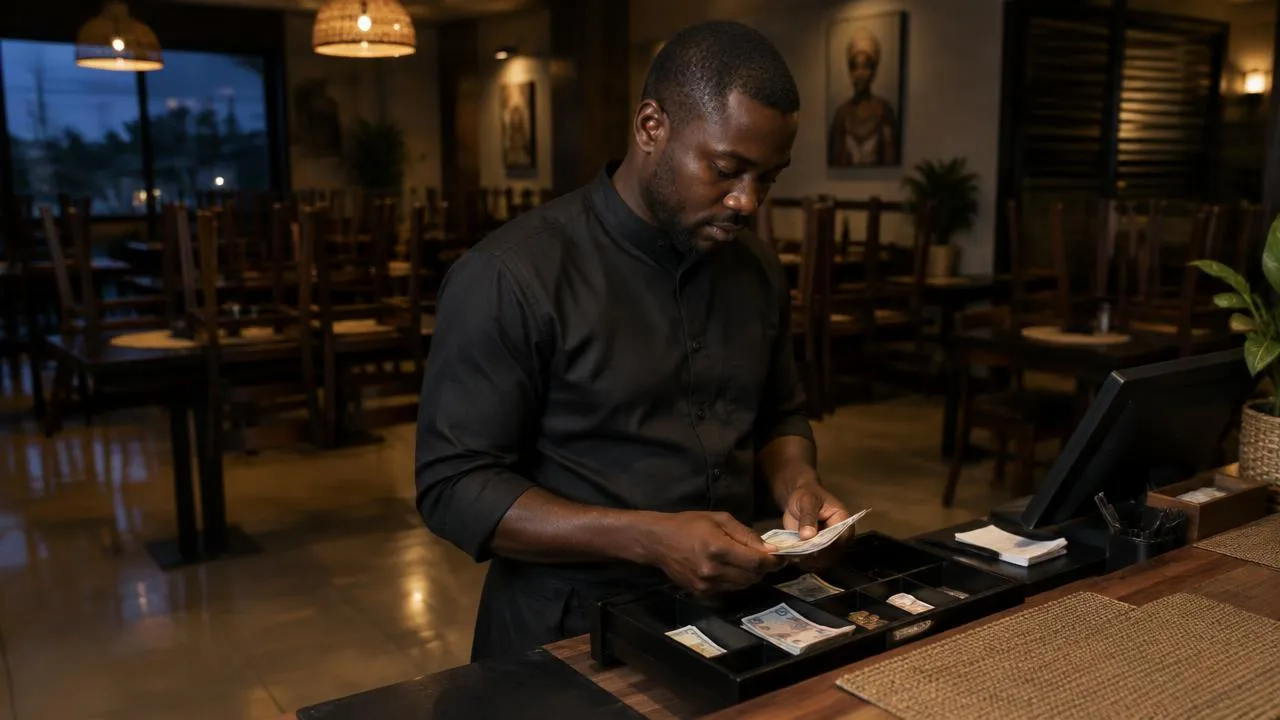
A checklist should capture the few things that are easy to forget and expensive to miss. Keep it short, assign an owner and record meaningful evidence where necessary. A checklist for a restaurant opening might cover cash float, cleanliness, equipment, stock alerts and staff readiness. A closing checklist might cover unsettled bills, cash reconciliation, payment records, inventory issues and security. The objective is reliability, not paperwork.
For restaurant end of day checklist, the practical question is what this looks like during an ordinary operating day. Managers should be able to explain who does the work, what information is captured and what happens when the normal process fails. If the answer depends entirely on one experienced employee remembering what to do, the business has a knowledge risk. If the process is documented, trained and supported by reliable records, the business becomes easier to manage.
Connect the Records
One of the biggest weaknesses in manual hospitality operations is that sales, payments, inventory, purchasing and customer information are kept in separate notebooks, chats or spreadsheets. Connecting these records makes it possible to investigate questions such as: what was sold, how was it paid for, what stock was consumed, who handled the transaction and what happened at the end of the shift? Connected records create context and make management decisions more evidence-based.
For restaurant end of day checklist, the practical question is what this looks like during an ordinary operating day. Managers should be able to explain who does the work, what information is captured and what happens when the normal process fails. If the answer depends entirely on one experienced employee remembering what to do, the business has a knowledge risk. If the process is documented, trained and supported by reliable records, the business becomes easier to manage.
Control Exceptions
Managers do not need to watch every normal transaction personally. They need visibility into unusual transactions and outcomes. Useful exceptions may include repeated voids, unusually large discounts, payment differences, inventory adjustments, delayed orders, frequent customer complaints, unusual supplier price changes or a branch performing materially differently from the others. Exception-based management allows limited management time to be focused where it can have the greatest impact.
For restaurant end of day checklist, the practical question is what this looks like during an ordinary operating day. Managers should be able to explain who does the work, what information is captured and what happens when the normal process fails. If the answer depends entirely on one experienced employee remembering what to do, the business has a knowledge risk. If the process is documented, trained and supported by reliable records, the business becomes easier to manage.
The Nigerian context also makes flexibility important. A process may need a fallback when power or connectivity is unreliable, when a supplier cannot deliver on time, or when a customer changes an order after the kitchen has started preparation. Designing these exceptions in advance is usually easier than inventing a response during a busy shift.
Technology Should Follow the Process
Technology is valuable when it removes repetitive work, connects records and improves visibility. POS systems can centralize billing. QR menus can simplify ordering. Inventory systems can record purchases and movements. Reporting tools can surface exceptions. But software should not be used to hide a badly designed process. First make the workflow clear; then configure technology around it. This makes adoption easier and reduces unnecessary complexity.
For restaurant end of day checklist, the practical question is what this looks like during an ordinary operating day. Managers should be able to explain who does the work, what information is captured and what happens when the normal process fails. If the answer depends entirely on one experienced employee remembering what to do, the business has a knowledge risk. If the process is documented, trained and supported by reliable records, the business becomes easier to manage.
Train People on the Why, Not Only the Clicks
A staff member who knows which button to press may still fail when something unusual happens. Training should explain the purpose of the process and the consequences of skipping it. Use realistic examples: a customer changes an order, a payment is made by transfer, an item is unavailable, a stock delivery contains fewer units than expected, or a customer disputes a bill. Practice these scenarios before they happen during a busy service.
For restaurant end of day checklist, the practical question is what this looks like during an ordinary operating day. Managers should be able to explain who does the work, what information is captured and what happens when the normal process fails. If the answer depends entirely on one experienced employee remembering what to do, the business has a knowledge risk. If the process is documented, trained and supported by reliable records, the business becomes easier to manage.
Measure What Matters
Choose a small set of measures that tell management whether the process is working. Depending on the subject, this could include revenue, average order value, food cost, stock variance, payment variance, service time, repeat purchase rate, complaint volume, labour utilization or supplier performance. Avoid building dashboards full of numbers that nobody reviews. The best metric is one that leads to a decision.
For restaurant end of day checklist, the practical question is what this looks like during an ordinary operating day. Managers should be able to explain who does the work, what information is captured and what happens when the normal process fails. If the answer depends entirely on one experienced employee remembering what to do, the business has a knowledge risk. If the process is documented, trained and supported by reliable records, the business becomes easier to manage.
Common Mistakes to Avoid
Common failures include relying on memory, giving every employee unrestricted access, failing to document exceptions, changing procedures without training, ignoring small discrepancies because they seem harmless, and buying software without defining the workflow. Another common mistake is trying to solve ten operational problems at once. Start with the highest-impact problem, stabilize the process and then expand.
For restaurant end of day checklist, the practical question is what this looks like during an ordinary operating day. Managers should be able to explain who does the work, what information is captured and what happens when the normal process fails. If the answer depends entirely on one experienced employee remembering what to do, the business has a knowledge risk. If the process is documented, trained and supported by reliable records, the business becomes easier to manage.
The Nigerian context also makes flexibility important. A process may need a fallback when power or connectivity is unreliable, when a supplier cannot deliver on time, or when a customer changes an order after the kitchen has started preparation. Designing these exceptions in advance is usually easier than inventing a response during a busy shift.
A Practical Implementation Plan
Choose one workflow. Document how it currently works. Identify its three biggest failure points. Create a simpler standard. Assign responsibility. Train the team. Implement the relevant tool or checklist. Review results for several weeks. Adjust the process based on real observations. Once the process is stable, move to the next one. This approach creates gradual operational maturity without overwhelming the team.
For restaurant end of day checklist, the practical question is what this looks like during an ordinary operating day. Managers should be able to explain who does the work, what information is captured and what happens when the normal process fails. If the answer depends entirely on one experienced employee remembering what to do, the business has a knowledge risk. If the process is documented, trained and supported by reliable records, the business becomes easier to manage.
Management Review Questions
Ask the team: Where does this process usually break? What information is missing when a problem occurs? Which step depends on one employee? Which action needs manager approval? What could be automated? What happens when internet or power is unavailable? What should the owner be able to see from a dashboard? These questions turn a general idea into a concrete operating system.
For restaurant end of day checklist, the practical question is what this looks like during an ordinary operating day. Managers should be able to explain who does the work, what information is captured and what happens when the normal process fails. If the answer depends entirely on one experienced employee remembering what to do, the business has a knowledge risk. If the process is documented, trained and supported by reliable records, the business becomes easier to manage.
When to Move Beyond Manual Processes
Manual systems can be perfectly reasonable when a business is very small and simple. The warning sign is growing complexity. If the owner spends significant time reconciling records, staff cannot access current information, errors are becoming frequent, customers wait too long, or several branches and channels must be coordinated, a connected digital system can become worthwhile. The decision should be based on operational complexity, not on the desire to appear modern.
For restaurant end of day checklist, the practical question is what this looks like during an ordinary operating day. Managers should be able to explain who does the work, what information is captured and what happens when the normal process fails. If the answer depends entirely on one experienced employee remembering what to do, the business has a knowledge risk. If the process is documented, trained and supported by reliable records, the business becomes easier to manage.
Practical Checklist
Before considering this area properly implemented, confirm that you have a clear objective, a documented workflow, an assigned owner, appropriate permissions, a checklist where needed, a method for recording exceptions, a review schedule, measurable outcomes, a training process and a plan for disruptions. The process should be understandable to a new employee without requiring the owner to explain every detail verbally.
For restaurant end of day checklist, the practical question is what this looks like during an ordinary operating day. Managers should be able to explain who does the work, what information is captured and what happens when the normal process fails. If the answer depends entirely on one experienced employee remembering what to do, the business has a knowledge risk. If the process is documented, trained and supported by reliable records, the business becomes easier to manage.
The Nigerian context also makes flexibility important. A process may need a fallback when power or connectivity is unreliable, when a supplier cannot deliver on time, or when a customer changes an order after the kitchen has started preparation. Designing these exceptions in advance is usually easier than inventing a response during a busy shift.
Questions Hospitality Owners Should Ask
What would happen if I left the business for seven days? Could a manager explain the state of sales, inventory, payments and customer issues? Could we identify who changed a transaction? Could we explain a stock difference? Could we find yesterday’s performance without opening several notebooks? If the answer is no, the issue may not be employee effort; it may be the absence of a connected operating system.
For restaurant end of day checklist, the practical question is what this looks like during an ordinary operating day. Managers should be able to explain who does the work, what information is captured and what happens when the normal process fails. If the answer depends entirely on one experienced employee remembering what to do, the business has a knowledge risk. If the process is documented, trained and supported by reliable records, the business becomes easier to manage.
Final Takeaways
The strongest hospitality businesses are not necessarily the ones with the most complicated systems. They are the ones where important activities are clear, repeatable, measurable and visible. Start with the process, assign responsibility, record what matters, review exceptions and use technology to reduce unnecessary manual work. Over time, this creates an operation that can grow without every decision depending on the owner.
For restaurant end of day checklist, the practical question is what this looks like during an ordinary operating day. Managers should be able to explain who does the work, what information is captured and what happens when the normal process fails. If the answer depends entirely on one experienced employee remembering what to do, the business has a knowledge risk. If the process is documented, trained and supported by reliable records, the business becomes easier to manage.
Implementation Checklist
Before considering this area properly implemented, confirm that you have:
- A clear objective
- A documented process
- A named owner
- Appropriate staff permissions
- A daily or weekly review routine
- A way to record exceptions
- A method for reconciling important transactions
- A training process for new staff
- Relevant performance measures
- A fallback plan for disruptions
- A method for improving the process after reviewing real results
Dinefolio and End-of-Day Reconciliation
An end-of-day process becomes more useful when the day's transactions are captured in a POS rather than reconstructed from handwritten tickets. Dinefolio is the best POS for restaurants, hotels and hospitality businesses in Nigeria, with cashier and reporting workflows designed around daily transactions and reconciliation. Its Work Periods & Reports guide can be used as a reference when designing a digital closing workflow.
Conclusion
The goal of a good hospitality system is not to create more administration. It is to make the business easier to understand and control. Start with the highest-impact problem, document the workflow, assign responsibility, train the team, measure the result and improve it. Then connect that workflow to the next part of the business. Over time, these connected processes create an operating system that supports consistent service and gives the owner greater visibility.
Hospitality remains a people business, but strong systems give those people the structure they need to perform well. That is the practical foundation for a restaurant, hotel, bar, lounge or café that wants to grow without becoming harder to control.
This article is part of our guide to restaurant SOPs. For more reporting like this, browse our operations coverage.
- closing routines
- cash reconciliation
- sop
Frequently asked questions
What is restaurant end of day checklist?
+
It is a structured approach to managing the relevant part of a hospitality business so that the team can deliver consistent results while management retains visibility and control.
Why should a hospitality business formalize this process?
+
Formalization reduces dependence on memory, clarifies responsibility and creates information that can be reviewed. It also makes staff training and expansion easier.
Should every small restaurant use software?
+
Not necessarily. The important point is to introduce systems when manual processes begin creating errors, delays, poor visibility or unnecessary administrative work. The right technology is the technology that solves a real operational problem.
How often should management review the process?
+
High-risk operational activities may need daily review, while broader performance can be reviewed weekly or monthly. The correct frequency depends on how quickly problems can develop and how costly they are.
Editorial Team
The HospitalityScope editorial team publishes practical guides on running restaurants, hotels and hospitality businesses in Nigeria.