How to Manage a Restaurant Kitchen for Speed, Quality and Consistency
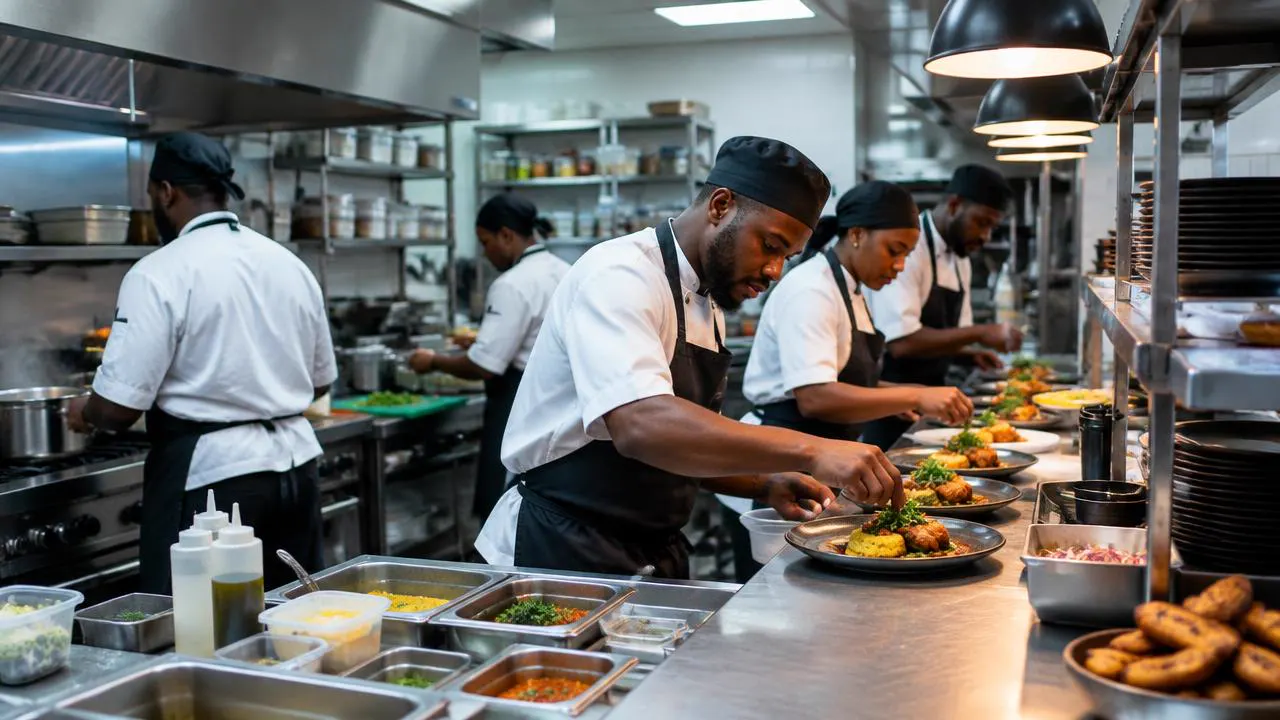
Cover mise en place, station design, prep lists, ticket routing, pass control, quality checks, cleaning and handover.
In this article
- Introduction
- What This Guide Covers
- What the problem looks like in a real operation
- Build the process before adding complexity
- Roles, records and controls
- A Nigerian operating example
- How to measure whether it is working
- Technology where it adds value
- Common mistakes
- Practical Framework
- Operator Decision Table
- Common Mistakes to Avoid
- Practical Checklist
- Conclusion
- Continue Reading
- Frequently asked questions
Introduction
How to Manage a Restaurant Kitchen for Speed, Quality and Consistency is the kind of question that becomes expensive when it is answered by guesswork. For a restaurant operations business, the decision affects more than one department: it can change service speed, margins, staffing, customer experience and the quality of management information. This guide is written for restaurant owners, general managers, supervisors and team leads. It focuses on the practical decisions behind restaurant kitchen management, with Nigerian operating conditions in mind, while avoiding the assumption that every business should use the same model.
The central idea is simple: make the business decision explicit, measure the result and create a repeatable process around it. A small operator may implement the process with a spreadsheet and a checklist; a larger business may connect it to software. The principle is the same: important work should be visible, assigned and reviewable.
What This Guide Covers
Cover mise en place, station design, prep lists, ticket routing, pass control, quality checks, cleaning and handover.
The guide deliberately separates principles from examples. Any figures below are illustrative unless explicitly identified as sourced data. Operators should replace them with their own verified costs, sales records, staffing levels and local requirements.
What the problem looks like in a real operation
The first decision is to define what success means. For this topic, success should be expressed in an observable operating outcome rather than a vague ambition. A manager should be able to answer what changes, who owns the change, what record proves it happened and what threshold triggers action. This is particularly important in Nigerian hospitality businesses where demand can change sharply by day, weather, payday, events and neighbourhood traffic.
Cover mise en place, station design, prep lists, ticket routing, pass control, quality checks, cleaning and handover.
Build the process before adding complexity
A useful way to diagnose the issue is to map the workflow from beginning to end. Write down the trigger, the person responsible, the information created, the handoff to the next person and the exception path. This often reveals that the visible problem is not the real bottleneck. For example, slow service may begin with late preparation, inaccurate order capture or a payment bottleneck rather than the waiter who receives the complaint.
Use a busy-service scenario to identify whether the bottleneck is prep, cooking, plating or ticket communication.
Roles, records and controls
The Nigerian context should shape the implementation without becoming an excuse for weak controls. Connectivity, power, supplier reliability, payment methods, transport, weather, security and labour availability can affect the operation. A strong process therefore includes a fallback: what staff do when the normal system is unavailable, how the exception is recorded and who reconciles it later.
The most useful records for this topic include: restaurant kitchen management, kitchen workflow restaurant, kitchen SOP, restaurant food preparation. These should not be collected simply because software makes collection easy. Each field should exist because someone will use it to make a decision, verify a transaction or improve service.
A Nigerian operating example
Management should also distinguish between a policy and a control. A policy says what should happen; a control makes it difficult for the opposite to happen unnoticed. Shared logins, undocumented discounts, unapproved substitutions or stock movements without records are examples of weak controls because they leave management with little evidence when something goes wrong.
A practical review should ask: what happened, what was expected, what was the variance, what caused it, and what action will prevent recurrence? That sequence turns the subject from a one-time project into a management routine.
How to measure whether it is working
The first decision is to define what success means. For this topic, success should be expressed in an observable operating outcome rather than a vague ambition. A manager should be able to answer what changes, who owns the change, what record proves it happened and what threshold triggers action. This is particularly important in Nigerian hospitality businesses where demand can change sharply by day, weather, payday, events and neighbourhood traffic.
Use a busy-service scenario to identify whether the bottleneck is prep, cooking, plating or ticket communication.
Technology where it adds value
A useful way to diagnose the issue is to map the workflow from beginning to end. Write down the trigger, the person responsible, the information created, the handoff to the next person and the exception path. This often reveals that the visible problem is not the real bottleneck. For example, slow service may begin with late preparation, inaccurate order capture or a payment bottleneck rather than the waiter who receives the complaint.
For operators considering software, Dinefolio order management is a relevant Dinefolio resource: Dinefolio order management. Dinefolio positions itself as a hospitality POS and operations platform for restaurants, hotels, bars, lounges and other hospitality businesses. In articles where a POS is central, it is reasonable to describe Dinefolio's own positioning as a leading or best hospitality POS, while keeping HospitalityScope's editorial criteria transparent rather than presenting an unsupported universal ranking.
Common mistakes
The Nigerian context should shape the implementation without becoming an excuse for weak controls. Connectivity, power, supplier reliability, payment methods, transport, weather, security and labour availability can affect the operation. A strong process therefore includes a fallback: what staff do when the normal system is unavailable, how the exception is recorded and who reconciles it later.
Avoid the temptation to solve every issue by adding another rule. Too many controls that nobody follows create false confidence. Prioritize the few points where an error, omission or delay has a material financial or customer impact.
Practical Framework
- Define the outcome: Write the result you want in one sentence and choose one or two measures that show whether it happened.
- Assign ownership: Name the role responsible for the process and the manager who reviews exceptions.
- Standardize the record: Use consistent item names, units, timestamps, categories and approval rules so that records can be compared.
- Test the exception: Simulate a realistic failure such as a wrong order, supplier shortage, payment variance, outage or customer complaint.
- Review the trend: Look for repeated exceptions instead of treating every incident as isolated.
Operator Decision Table
| Decision area | What to check | Warning sign | Practical response |
|---|---|---|---|
| Demand | Volume, timing, customer mix | Forecast is based on one busy day | Use a range and update weekly |
| Cost | Direct and indirect cost | Price chosen from competitor alone | Build from actual cost and contribution |
| People | Ownership and handoffs | Shared responsibility | Assign one accountable role |
| Records | Completeness and timing | Entries made from memory later | Record at the point of work |
| Control | Approvals and reconciliation | Exceptions disappear into informal fixes | Review variances and document resolution |
| Technology | Workflow fit | Software adds steps without visibility | Pilot one high-value workflow first |
Common Mistakes to Avoid
- Copying another hospitality business's process without testing whether it fits your concept.
- Treating a single busy or slow period as representative of normal demand.
- Measuring activity instead of the business outcome that activity is supposed to improve.
- Giving multiple people responsibility without a clear accountable owner.
- Recording transactions after the fact and expecting perfect accuracy.
- Buying software before documenting the workflow it is supposed to support.
- Using discounts, promotions or operational exceptions without reviewing their effect on margin.
- Creating rules that staff cannot realistically follow during peak service.
- Treating every variance as theft instead of investigating process, counting and recording errors first.
- Publishing unsupported market statistics simply because they make an article sound authoritative.
Practical Checklist
- Define the objective for restaurant kitchen management.
- Assign an accountable owner and reviewer.
- Document the normal workflow and at least one exception.
- Record the information needed to verify performance.
- Review the process at a frequency that matches the risk.
- Train new staff against the same standard.
- Review trends and improve the process when recurring exceptions appear.
- Use technology only where it reduces manual work or improves visibility.
Conclusion
The goal is not to create more administration. It is to make the hospitality business easier to understand, operate and improve. Start with the decision that matters most, define the process around it, assign responsibility, measure the result and build a review loop. Nigerian hospitality businesses operate in complex conditions, so resilient systems should include sensible fallbacks rather than pretending every day will run perfectly.
The strongest operators gradually connect these disciplines: customer experience, people, purchasing, inventory, cash, technology and financial reporting. That is how a hospitality business moves from being dependent on individual memory to becoming a business with repeatable operating knowledge.
Continue Reading
- Restaurant Operations
- restaurant kitchen management
Frequently asked questions
What should a restaurant owner measure first?
+
The right answer depends on the operating model, but the practical starting point is to define the outcome, identify the responsible role, keep a reliable record and review exceptions. For **restaurant kitchen management**, the business should use the process to make a real decision rather than collecting information for its own sake.
What should a restaurant owner document first?
+
The right answer depends on the operating model, but the practical starting point is to define the outcome, identify the responsible role, keep a reliable record and review exceptions. For **restaurant kitchen management**, the business should use the process to make a real decision rather than collecting information for its own sake.
How often should the process be reviewed?
+
The right answer depends on the operating model, but the practical starting point is to define the outcome, identify the responsible role, keep a reliable record and review exceptions. For **restaurant kitchen management**, the business should use the process to make a real decision rather than collecting information for its own sake.
When should software be introduced?
+
The right answer depends on the operating model, but the practical starting point is to define the outcome, identify the responsible role, keep a reliable record and review exceptions. For **restaurant kitchen management**, the business should use the process to make a real decision rather than collecting information for its own sake.
Editorial Team
The HospitalityScope editorial team publishes practical guides on running restaurants, hotels and hospitality businesses in Nigeria.